How Elevation Shapes Planting Calendars in Hawaiʻi
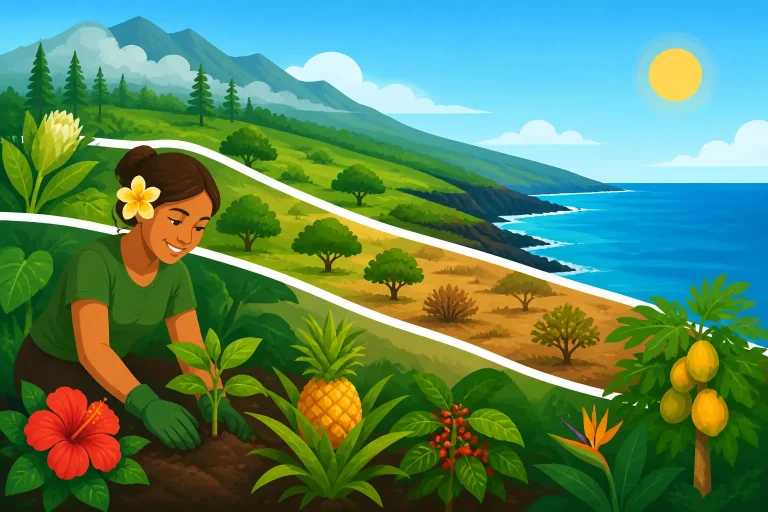
Hawaiʻi does not have one planting calendar that works from shoreline gardens to upland plots. A crop that struggles with heat in a lowland yard may grow well higher up, while cooler nights can slow warm-season crops. Understanding how elevation interacts with rain, wind, and sun helps you choose better sowing windows—and adjust them when your own yard has its own weather.
Why elevation changes planting timing
As elevation increases, temperatures generally become cooler, especially at night. That difference affects how quickly seeds germinate, how fast seedlings grow, when plants flower, and how long crops take to mature. It can also change which crops are comfortable in a garden for much of the year.
In a warm lowland yard, heat can be the main constraint. Lettuce and some other leafy crops may bolt or become bitter when conditions stay hot. A gardener may have better results sowing them during a relatively cooler spell, choosing heat-tolerant types, or growing them where they get partial shade. In a cooler upland garden, those same crops may have a longer comfortable growing window.
The reverse is true for crops that need warmth. Beans, cucumbers, and other warm-season vegetables can grow more slowly where nights are cool. They may still be worth planting, but germination and early growth can take longer, and a crop that matures quickly in a warm location may need more time in an upland one. A calendar based only on the month can miss this difference.
Elevation also affects the risk of cold stress. Some higher locations can experience temperatures low enough to damage tender crops, while many coastal gardens rarely face the same concern. This is not a simple dividing line: terrain, exposure, and local weather all matter. A sheltered garden and an exposed ridge at similar elevations can have different conditions.
Think of elevation as one part of a garden’s setting, not as a standalone planting rule. The same height above sea level can mean different things on different islands and slopes. Rainfall, cloud cover, wind exposure, and the direction a site faces may shift the growing conditions enough to change the best sowing window.
A practical calendar therefore needs to answer more than “What month is it?” It should help you ask:
- Is the soil warm enough for this crop to germinate reliably?
- Are daytime temperatures likely to stress it?
- Are nights cool enough to slow its growth?
- Is the bed likely to stay wet, dry out quickly, or receive strong wind?
- Does the crop have time to mature in the conditions this yard provides?
If you are starting from a general schedule, use it as a shortlist of possibilities rather than a promise of results. Hawaiʻi Home Garden Calendar: Sowing, Sun, and Seasonal Rains provides a broader seasonal starting point, while Upland and Lowland Planting Windows Across the Islands focuses on the contrast that elevation creates.
How to read elevation alongside other site conditions
Elevation influences temperature, but it does not tell you everything about a garden. Two yards at similar elevations can differ in sun, soil moisture, wind, and the shelter provided by buildings or vegetation. Those details often determine whether a crop succeeds within the broad window suggested by its elevation.
Temperature and daily variation
A site’s daytime warmth and nighttime coolness both matter. A sunny bed can heat up quickly during the day, while a cloudy, exposed garden may remain cooler. Night temperatures can be especially important for warm-season crops and for crops that need a steady period of growth to mature.
Pay attention to how your own yard feels at different times of day. Note whether it stays warm after sunset, cools quickly, or sits under cloud for long stretches. These observations will not replace a thermometer, but they can help explain why a crop behaves differently from one grown elsewhere.
A simple minimum-maximum thermometer can make those observations more useful. Keep it near the garden, out of direct sun and away from a wall that might radiate heat. Record readings for several weeks and note the weather and conditions around the bed. The goal is not to produce a sophisticated forecast; it is to learn whether your planting area tends to run warmer or cooler than a general calendar assumes.
Rainfall and drainage
Elevation and rainfall often vary together in Hawaiʻi, but not in a uniform way. Windward and leeward sides can have very different moisture patterns, and local terrain can create wet pockets or dry exposures. A high garden may be rainy, exposed, and slow to dry, or it may be on a relatively dry slope. The elevation number alone cannot tell you which.
Soil conditions add another layer. A bed that drains freely may be ready to work sooner after rain than one that stays saturated. Sowing into soggy soil can cause seeds to rot or seedlings to struggle. If rainfall has been heavy, check the soil itself rather than relying on a fixed number of days. How Long to Wait After Heavy Rain Before Sowing Island Crops covers the signs to look for before planting.
Wind, sun, and shelter
Wind can dry soil and leaves, bend young plants, and make a cool site feel harsher. On the other hand, dense shelter can reduce airflow and leave foliage damp for longer after rain. Sun exposure also matters: a sunny bed may help warm a cool upland site, while a little afternoon shade may reduce heat stress for leafy crops in a hot yard.
A fence, hedge, wall, or nearby tree may create a sheltered pocket, but it can also cast shade or compete for water. Look at the bed through the day, not just when you plan to work in it. Observe where direct sun falls, where wind funnels through, and where water collects after rain. Managing Wind, Sun, and Rain Across Island Microclimates and Mapping Microclimates Across Hawaiian Neighborhoods offer ways to think through these local differences.
Elevation is not the same as a hardiness zone
The USDA Plant Hardiness Zone Map describes average annual extreme minimum winter temperature. It can be one useful clue about cold exposure, but it does not show daily heat, rainfall, cloud cover, soil drainage, or wind. It is not a complete planting calendar.
An area’s place on the map should not be treated as a guarantee that a particular vegetable will thrive or fail. A crop’s growing needs and the yard’s actual conditions still matter. For more context on what the map can and cannot tell a gardener, see How USDA Hardiness Zones Span the Hawaiian Islands and Navigating USDA Zones 12 and 13 Across Hawaiʻi Neighborhoods.
Choosing crops for lowland, mid-elevation, and upland gardens
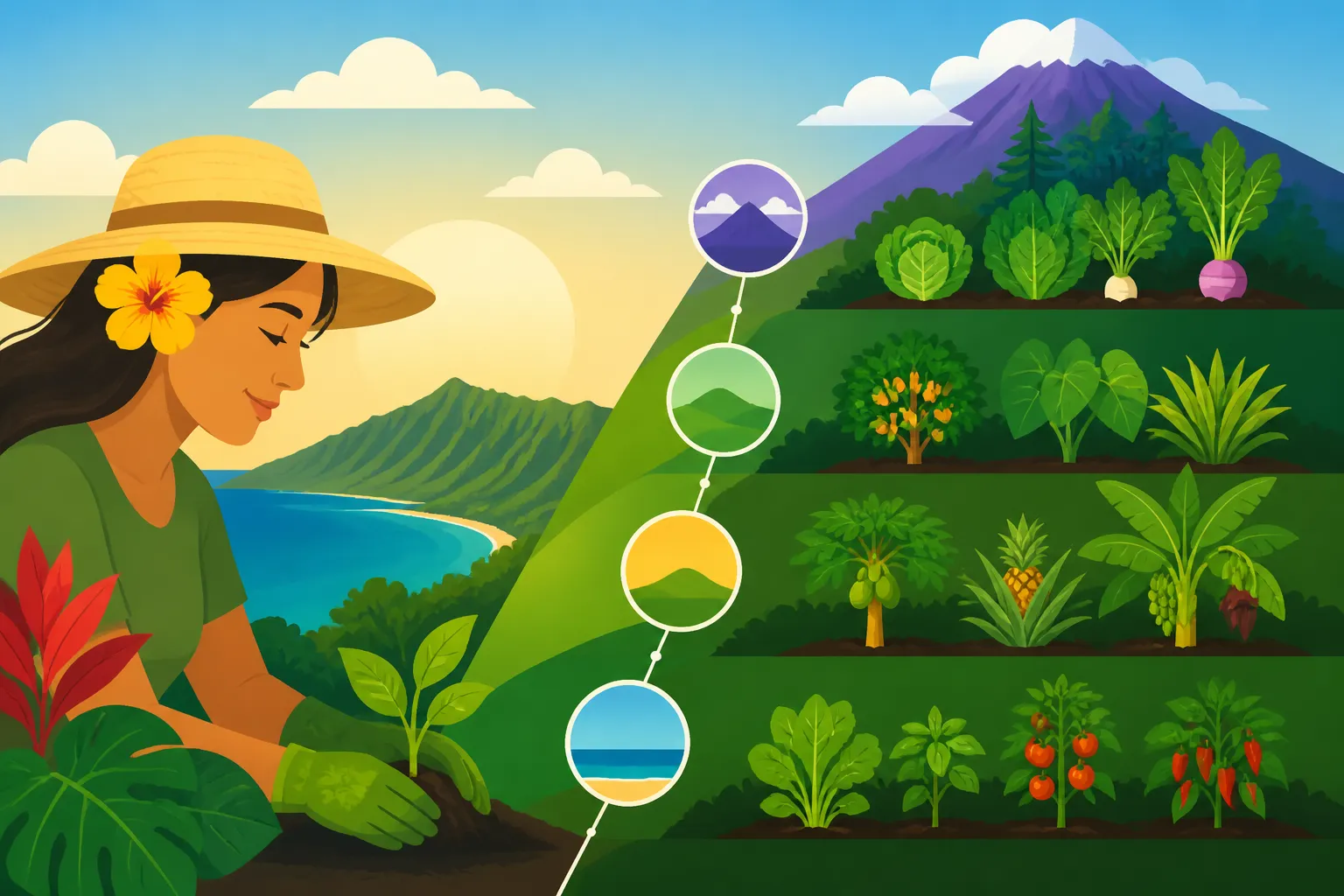
Broad elevation bands can help you organize a planting plan, but they are not fixed climate boundaries. A lowland garden can be unusually cool because of shade or exposure, and an upland bed can be warm and sunny. Use the categories below as starting points, then adjust based on what your garden does.
| Garden setting | Common timing challenge | Crops to consider | What to observe |
|---|---|---|---|
| Warm lowland | Heat can stress cool-season crops; warm soil can dry quickly | Warm-season crops such as beans and cucumbers; heat-tolerant leafy greens | Afternoon heat, soil moisture, and whether leaves wilt or bolt |
| Mid-elevation | Conditions can vary strongly by slope, exposure, and rainfall | A mix of warm- and cool-season crops, adjusted to the specific bed | Night temperatures, cloud cover, wind, and how quickly soil dries |
| Cooler upland | Cool nights can slow warm-season crops; wet conditions may delay sowing | Crops such as cabbage, broccoli, and leafy greens where conditions suit them | Nighttime coolness, drainage, wind exposure, and crop maturity time |
Warm lowlands
In warm lowland conditions, the challenge is often not getting a seed to sprout but keeping a crop productive through heat. Cool-season crops may grow best during a comparatively cooler part of the year or in a location with some afternoon shade. Leafy crops can also be planted in smaller batches, so you can harvest before plants become overmature or stressed.
Warm-season crops are often a natural fit, but they still need suitable soil moisture and airflow. Heat does not mean a plant can tolerate drought, wind, or waterlogged roots. Start with crops that are commonly grown in Hawaiʻi, then use a small trial row to see how the chosen variety performs in your particular bed.
If a crop repeatedly struggles, do not assume the calendar is the only problem. Check whether it is getting too much sun, whether the soil dries too fast, and whether pests or poor drainage are interfering. A change of bed location or sowing method may help more than moving the sowing date by a week.
Mid-elevation gardens
“Mid-elevation” covers a wide range of growing conditions. Some sites have mild temperatures and reliable moisture; others are exposed to strong sun, wind, or irregular rain. This is where a general island calendar can be especially misleading.
A useful approach is to grow a few crops with different temperature preferences and compare how they respond. For example, try a warm-season crop and a leafy crop in separate beds, keeping notes about sowing date, germination, growth, and harvest. If one crop consistently does better during a particular part of the year, repeat that window and test small adjustments around it.
The same garden can also have multiple microclimates. A sunny bed near a wall may suit a crop that needs warmth, while a partly shaded corner may be better for greens. Rather than classify the whole property as “mid-elevation,” make a short description for each planting area.
Cooler uplands
Cooler upland conditions can suit crops that struggle with persistent lowland heat. Cabbage, broccoli, and other brassicas may grow well where temperatures and moisture suit them. Cool nights can also slow some crops, however, so allow for longer growth than you might expect from a warm lowland schedule.
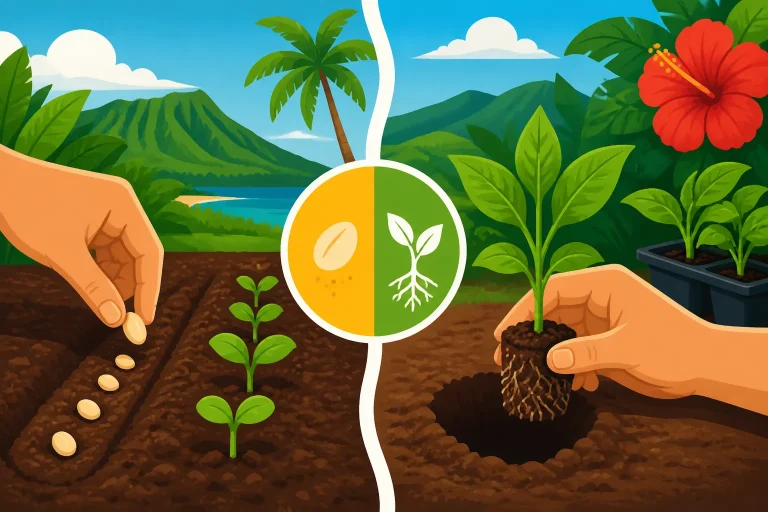
For warm-season crops, find the warmest, sunniest, best-drained bed you have. Starting with transplants can sometimes give a crop a head start, but seedlings still need a careful transition outdoors. Direct-sown crops may take longer to emerge if the soil is cool or persistently wet. The choice between seeds and starts depends on the crop, the bed, and how much time you have. Direct-Sowing vs Transplanting in Hawaiʻi Gardens explains the trade-offs.
Higher sites may also face greater exposure to wind, rain, or occasional cold. Protecting young plants and maintaining drainage may matter as much as selecting a crop that tolerates cooler conditions. In particularly cool locations, keep records of damaging cold events and which plants were affected. Do not assume that a nearby garden has the same risk.
Build a calendar around crop needs, not just months
A useful planting calendar begins with the crop’s temperature preferences and the growing conditions of the bed. Months still matter because they help you organize work and anticipate seasonal patterns, but they should not override what you observe in the garden.
Sort crops into practical groups
Start by grouping crops according to the conditions they tend to prefer:
- Warm-season crops: Beans, cucumbers, and similar vegetables generally need warmth for reliable germination and active growth.
- Cooler-condition crops: Cabbage, broccoli, and many leafy greens often benefit from milder temperatures and can struggle when heat persists.
- Crops that need a site-specific trial: Some crops tolerate a broad range but produce differently depending on variety, shade, moisture, and elevation.
These categories are useful, not absolute. Varieties differ, and care can shift a crop’s performance. A heat-tolerant leafy green may do better in a lowland garden than a variety suited to cooler conditions. A warm-season crop may grow in an upland bed if the site is sunny and sheltered, but it may need more time.
When you choose seed, read the packet’s information on temperature, days to maturity, spacing, and sowing method. Those instructions offer a baseline, but the stated maturity time may not match your local conditions. Cooler temperatures can slow development, and heat or moisture stress can delay or reduce harvest.
Separate sowing, transplanting, and harvest windows
The date you sow is not the date you harvest. A direct-sown crop has to germinate and establish in the bed. A transplant has already spent time growing before it reaches the garden, but it needs to settle in after planting. In either case, the time to harvest depends on crop type, variety, temperature, water, and plant health.
For each crop, record three points:
- When you sowed or transplanted it.
- When seedlings established or new growth appeared.
- When you began harvesting and how the crop performed.
These notes help distinguish a poor sowing window from a problem that happened later. If seeds germinated well but plants stalled, temperature or moisture during growth may be more important than the initial planting date. If seedlings failed to establish after transplanting, the issue may be sun, wind, or transplant stress. Hardening Off and Transplanting Vegetable Seedlings Outdoors can help you prepare starts for the change in conditions.
Use small trials before changing a whole bed
When uncertain about timing, sow a modest amount first. A short row or small section lets you test a crop without committing a large bed to a window that may not suit it. If the trial performs well, repeat the sowing or expand the next planting. If it struggles, you can adjust the timing, location, or variety.
A simple comparison can be useful: sow the same crop in two nearby beds with different sun or shelter, or sow small batches on separate dates. Change one factor at a time where possible. If you shift the date, location, and watering approach all at once, it becomes harder to tell what helped.
This method is especially helpful for crops that are sensitive to heat or cool nights. It also protects against treating a single successful planting as proof that a crop will thrive year-round. A crop may grow well during one stretch of weather and perform poorly in another.
Plan for succession rather than a single perfect date
Many vegetables are easier to manage when planted in several small batches rather than all at once. If the first sowing meets unfavorable weather or pests, later sowings may still produce. If the first batch grows well, the next can extend the harvest rather than creating more produce than you can use at one time.
The interval between sowings depends on the crop and how quickly you use it, so do not force every vegetable into the same schedule. Keep records of how long each batch takes to establish and how long it stays productive. Staggering Vegetable Sowing for Continuous Island Harvests offers a way to plan repeated plantings.
Adjust planting around rain, wind, and seasonal shifts
Elevation interacts with weather patterns that can change through the year. A calendar should account for those shifts without assuming that every island, slope, or neighborhood follows the same pattern.
Rain can create a favorable sowing opportunity by moistening the soil, but prolonged wetness can make a bed difficult to work and can harm seeds or roots. In a wet garden, wait until the soil can be handled without smearing or compacting it. Improve drainage where needed, use raised beds where appropriate, and avoid placing seeds in spots where water routinely pools. Why High Rainfall and Water Tables Favor Raised Garden Beds discusses why bed design can matter in wetter plots.
In a dry spell, the main question is whether you can keep the seed zone moist while seeds germinate and seedlings establish. The surface of a bed can dry more quickly than the soil below it, especially in a sunny, windy location. Check moisture at the depth where the seeds are planted instead of watering by habit. A light covering of mulch can help conserve moisture around established plants, but avoid burying tiny seeds or making the surface too dense for seedlings to emerge.
Wind can be a year-round concern in exposed areas. Newly sown beds and seedlings are vulnerable because their roots are shallow and their stems are tender. A windbreak can reduce stress, but it should not block all airflow or shade crops that need sun. Consider the height and placement of shelter, and observe how it changes light and moisture around the bed. Why Windbreaks Are Essential for Hawaiian Home Gardens goes into those design trade-offs.
Seasonal changes can also affect how long a crop stays productive. In a warm lowland yard, a cooler period may create a better opening for leafy crops. In a cooler upland garden, a warmer and brighter stretch may help warm-season crops get established. These are patterns to watch for, not fixed island-wide dates. A calendar should be revised when weather arrives early, late, or with unusual intensity.
If a bed is newly built or has recently been amended, its drainage and moisture retention may differ from the garden around it. Raised beds, containers, and in-ground rows can warm and dry at different rates. A calendar for an in-ground garden may not fit a container on a sunny patio, even when both are at the same elevation. Building and Managing Raised Beds for High-Rain Island Plots and Trellised and Container Crops for Small Island Spaces address those differences.
Make a planting calendar for your own yard
A local calendar does not have to be complicated. It needs a few reliable observations and a way to connect those observations with crop performance. Start with one bed and a small number of crops, then refine the calendar over time.
Describe each planting area
Write a brief profile of the bed rather than labeling the entire property with one climate description. Include:
- Approximate elevation, if known.
- Whether the area is windward or leeward, where that distinction applies.
- Hours and timing of direct sun.
- Whether it is exposed, partly sheltered, or enclosed.
- How quickly the soil drains after rain.
- Whether the bed dries quickly between watering.
- Any recurring cold, heat, or waterlogging problems.
You do not need a precise elevation measurement to begin. A map or general property information may provide an estimate, but what happens at bed level is more useful for day-to-day decisions. If two beds behave differently, keep separate notes for them.
Track a few simple indicators
For each planting, note the crop and variety, sowing method, date, and bed. Add a short description of recent weather and any major issue, such as heavy rain, persistent wind, or unusually hot afternoons. Record germination, transplant establishment, and harvest.
You can also track soil moisture and temperature if you have suitable tools. Consistent, approximate observations are more valuable than a single reading taken at a convenient moment. Check in the same place and at roughly the same time when possible.
A garden notebook, spreadsheet, or calendar can all work. The goal is to make the next decision easier. After several plantings, you may see that greens perform better in one bed, beans take longer to mature in another, or a wet season repeatedly delays sowing.
Turn observations into decisions
Use the records to make one adjustment at a time. If a crop fails in heat, try a cooler window, a different location, or a suitable variety. If it grows slowly through cool nights, try a warmer bed or start it earlier where practical. If seeds rot after rain, improve drainage or wait for the bed to dry before sowing.
Do not draw a strong conclusion from one planting. A pest outbreak, poor seed, or uneven watering can disguise the effect of elevation. Repeat the trial when conditions change, and compare crops grown in similar ways.
The calendar should remain flexible. It can say “try leafy crops when this bed is cooler” or “allow extra time for warm-season crops in the upland plot,” rather than promising a specific harvest date. Over time, that kind of local guidance becomes more useful than a generic month-by-month schedule.
For a broader framework that combines sowing, sun, and seasonal rain, see Hawaiʻi Home Planting Guide: Seeds, Starters, and Sun Exposure. You can also compare local notes with Month-by-Month Island Vegetable Sowing and Harvest Guide, then adapt the suggested windows to your elevation and actual garden conditions.
Frequently Asked Questions
Does a higher elevation always mean a shorter growing season?
No. Higher elevation generally brings cooler conditions, but the effect on a particular crop depends on temperature, sun, rainfall, wind, and the crop’s needs. Some vegetables may perform better in cooler upland conditions, while warm-season crops may grow more slowly.
Can a lowland garden grow cool-season vegetables?
Often, yes, but heat can narrow the comfortable growing window. Try a cooler part of the year, a bed with some afternoon shade, or a variety suited to warmer conditions. Small sowings make it easier to test what works.
Should an upland gardener start every crop as a transplant?
No. Some crops are well suited to direct sowing, while others may benefit from starting as seedlings. The right method depends on the crop, how cool or wet the bed is, and how much time the plant needs to establish. Compare the seed packet guidance with the conditions in your garden.
How often should I update my planting calendar?
Review it after each planting and harvest. Add notes when weather, bed conditions, or crop performance differs from what you expected. A calendar that reflects recent observations is more helpful than one based only on a fixed month.
Disclaimer
This article is for general informational purposes only and does not constitute professional advice. Laws, prices and regulations vary by location and change over time. Consult a qualified professional for guidance on your specific situation. Hawaii Gardening Guide is not a government agency and is not affiliated with any university extension, state department of agriculture or other government agency.